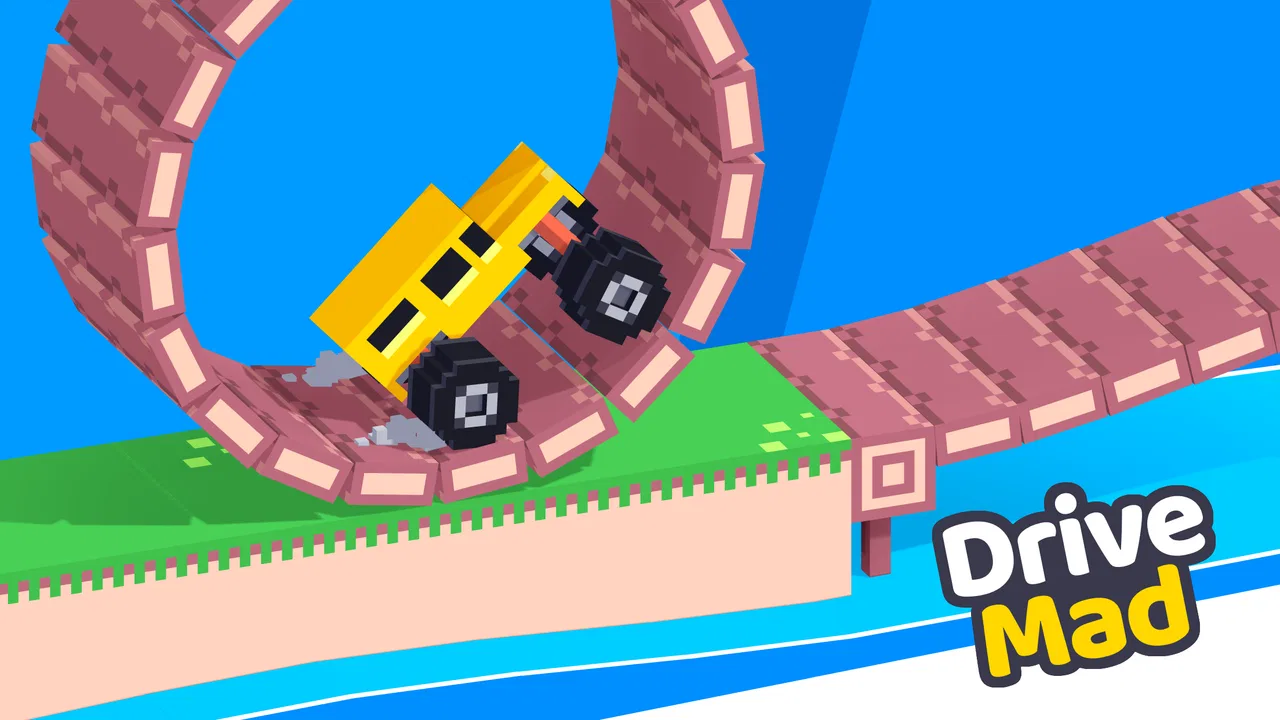
Fancade: 100+ Mini Games
- 4.3
- Rating
- 10.00M
- Installs
- Free
- Price

 Analysis by App-foxy
I usually learn more about an arcade game from its first few minutes than from its feature list. With Fancade, that first impression is pleasantly different from opening a single-purpose game: I am given a broad collection of small games, so I can move on quickly when one style does not suit me. It is free to download, made by Poki, and aimed at Everyone, which makes it easy to recommend for casual play without pretending it is a deep replacement for a dedicated console or mobile title.
The basic appeal is simple: there are more than one hundred mini games to try offline, and the app also lets players create and share games of their own. That combination gives it two distinct personalities. I can use it as a quick arcade shelf when I have only a few minutes, or I can stay longer and experiment with the creative side. In my experience, the first use is much easier to understand than the second, so a new player should begin by treating it as a collection of short challenges rather than feeling pressured to build anything immediately.
What to expect when you open Fancade
The most useful way to think about this game is as a sampler. Instead of committing to one repeated mechanic, I can jump between different kinds of short arcade experiences. Some will be immediately readable, while others may need a few attempts before the controls or objective become clear. That variety is the reason I keep returning to it, but it is also the main source of unevenness: not every mini game will match my taste, and the collection does not offer the same polished, focused identity as a carefully designed standalone game.
You May Also Like

 Blood Strike: 2.5 Anniversary
Blood Strike’s Loadouts Turn Every Drop Into a Tactical Gamble
A close look at Blood Strike’s custom loadouts: how fast access to signature weapons reshapes its battle royale rhythm, rewards preparation, and narrows the gap between fights.

 Pandora - Music & Podcasts
Pandora’s Music Is Easy to Start, but Harder to Recover
Pandora’s strength is its low-effort path from a seed to a station. Its weak spot is how much confidence it asks you to place in connection, setup, and quiet recovery.

 8 Ball Pool
 Is Built on Rivalries, Rematches, and Routine
A close look at the rivalries, rematches, shared routines, and unanswered safety questions that turn a quick pool match into a persistent mobile community.

 Samsung Music
’s Quiet Strength Is Playing What You Already Own
Its reach comes less from spectacle than from dependable access to a personal library. That simplicity is both the app’s strongest retention engine and its ceiling.

 AccuWeather: Weather Radar
AccuWeather Review: A Quick, Clear Forecast for Everyday Decisions
For everyday plans, the best forecast is the one you can understand quickly. AccuWeather makes rain timing, radar, and local conditions easy to act on, with a few trade-offs.

 Hill Climb Racing
Why Hill Climb Racing Still Turns Crashes Into One More Run
A tiny car, a bumpy hill and one more upgrade: Hill Climb Racing keeps resurfacing because its simple chaos makes every near-miss feel personal.
More From Our News Desk



That trade-off works well in ordinary situations. If I am waiting for an appointment, taking a short break, or looking for something that does not demand a long story or complicated progression, I can test a game, decide quickly, and move elsewhere. I do not have to spend an hour learning one system before reaching the interesting part. On the other hand, anyone looking for a single competitive game with a carefully balanced ranking system may prefer a dedicated arcade title.
The offline angle is especially practical. I can use the mini-game collection in places where I do not want to depend on a connection, such as during a commute or while travelling. I still recommend opening the app before leaving home so I know the content I want to play is available on the device. That small habit makes the experience more dependable than waiting until the exact moment I need entertainment.
Its public reception suggests that the app has reached a substantial audience, with an average rating of 3.9 from around 108 thousand ratings and more than 10 million installs. I read those figures as a sign of broad appeal rather than a guarantee that every player will love it. A collection built around variety naturally creates mixed reactions: one person may enjoy rapid experimentation, while another may find the lack of a single central game less satisfying.
The age rating of Everyone also fits the relaxed, accessible presentation. I would still supervise a younger child if the device is shared, not because the rating makes the game unsuitable, but because the creative and sharing elements may deserve a quick explanation. The app is best introduced as a place to try short games and gradually explore creation, not as an endless stream that a child must navigate alone.
How I would approach the first session
My advice is to resist the urge to judge the whole app by the first mini game. Give the opening selection a fair try, but move on as soon as the controls feel awkward or the objective does not click. The strength of a multi-game arcade is the freedom to change direction. Staying with an uninteresting challenge just because it appeared first defeats the purpose of the format.
I also set a small goal before I begin. For a short break, that goal might be completing one challenge. For a longer session, I might sample several different styles and remember which ones felt natural. This makes the collection feel intentional instead of random, and it prevents me from spending the entire session repeatedly restarting a game that is simply not a good fit for me.
Getting started without unnecessary friction
Fancade was released on April 15, 2020, and the current version is 1.15.22. It requires Android 6.0 or later, so I would check the device version before planning around it. The game is free, although in-app purchases range from $0.99 to $24.99 per item. I treat the free download as a chance to explore the core experience first, then decide whether any optional purchase is worthwhile rather than assuming I need to spend money to understand the app.
The first setup is straightforward from a player’s point of view: install the game, open it, and begin exploring the available arcade content. I would not start with the creation tools unless I already know that building games is the main reason I installed it. The collection gives me a quicker way to understand the controls, pacing, and overall feel before I invest attention in making something myself.
One useful first-session routine is to keep the phone in the orientation and grip that feel most stable, then learn the control pattern before trying to play quickly. Short arcade games often look simple because their rules are compact, but compact rules still require timing. When I rush immediately, I can mistake unfamiliar controls for poor design. A few deliberate attempts usually tell me whether the challenge is enjoyable or merely inconvenient.
Another practical tip is to use the offline capability as part of the setup rather than as an emergency feature. I open the app while connected, browse enough to understand where the games are, and then test it again in the kind of place where I expect to play without a connection. This is a better workflow than discovering during travel that I should have prepared my preferred games earlier.
The first meaningful success
For a first-time player, “success” should not mean mastering the entire collection. I count it as completing one mini game or reaching a point where I understand why I failed and what I will change on the next attempt. That is a realistic milestone because the app is designed around short experiences, not one huge campaign that needs hours before it becomes rewarding.
I usually choose a game that explains itself quickly, make one careful attempt, and then repeat it with a specific adjustment. Maybe I change the timing of a tap, slow down before a turn, or pay closer attention to the goal. The important part is turning the second attempt into an experiment. This approach helps me distinguish a genuine learning curve from a game whose controls I simply do not enjoy.
Once I complete something, I spend a moment deciding whether I want more of that style or a complete change. That decision is where the collection becomes more useful than a normal single-game download. If I am in the mood for repetition, I can stay with a successful format. If I am tired of it, I can switch rather than forcing the same mechanic until the session becomes work.
Parents or new mobile players may appreciate this low-pressure path. A child can aim for one completed challenge, while an adult can use the same structure as a quick mental break. The app does not require me to understand every option before I start playing. I can learn by doing, and the first meaningful result arrives through a small, concrete action rather than a long tutorial.
Where new users can become confused
The biggest possible confusion is the difference between playing and creating. The collection is the immediate attraction, while the creation tools represent a deeper activity that may take more patience. I would not assume that seeing an option to make a game means I should understand it instantly. If my goal is entertainment, I can ignore creation until I am curious. If my goal is design, I should expect a more experimental process and allow time to learn how the building tools work.
Sharing can also change the way I think about the app. A game I create is not only a private experiment; the point of sharing is to let other people try it. That means I would test a creation myself several times before sending it anywhere. I would check whether the objective is understandable, whether the controls respond as intended, and whether the challenge is difficult for a reason rather than because the instructions are unclear. This testing habit is one of the most valuable ways to use the creative side.
Another common mistake is expecting every mini game to have equal depth. A collection of short arcade ideas is naturally broader than a focused title. Some experiences may be enjoyable for a few minutes and then run out of appeal, while others may invite repeated attempts. I do not see that as a flaw by itself, but it does mean I judge each game by the right standard: quick clarity and replay value, not the scale of a full-length adventure.
The purchase model is worth keeping in mind as well. Because the game is free but includes optional items priced from $0.99 to $24.99, I would review any purchase prompt carefully and decide whether it improves the way I personally use the app. A player who only wants occasional offline mini games may be perfectly satisfied without spending. Someone who becomes deeply involved in the broader experience may view optional purchases differently. The sensible approach is to explore first and buy later, not the other way around.
Finally, I would not confuse the average rating with a promise of universal quality. A 3.9 average from around 108 thousand ratings is respectable, but it also reflects the fact that players respond differently to a large, varied collection. I would recommend it confidently to people who enjoy sampling ideas, while warning focused players that variety can feel less consistent than a single polished arcade game.
Moving from casual play to deeper use
After I have found a few mini games I enjoy, the next step is to use the collection more deliberately. I can divide sessions by mood: quick reaction challenges when I want energy, slower experimentation when I want to think, and creative work when I am willing to concentrate. This prevents the app from becoming a shapeless menu and gives each visit a purpose.
The creation feature is where Fancade separates itself most clearly from the usual alternatives. A typical arcade download gives me finished content and asks me to play it. Here, I can eventually move from consumer to creator, then share the result. That is a meaningful advantage for curious players, students exploring basic game ideas, or anyone who enjoys turning a simple rule into a playable challenge. It is not automatically better for everyone, though. If I want instant action with no design decisions, a conventional arcade game is more efficient.
When I experiment with creating, I would begin with one mechanic and one clear objective. A small idea is easier to test than an ambitious project with many moving parts. I would play it from the beginning as if I had never seen it, because the creator’s intention is not enough; the player needs to understand what to do. Then I would share only after the basic experience feels fair. This workflow turns the creative tools into a practical learning exercise rather than a feature I open once and abandon.
The app also works well as a social prompt without requiring the whole experience to become competitive. I can share a creation with a friend and ask whether the goal was obvious, whether the difficulty felt reasonable, and which moment was most enjoyable. That kind of feedback is more useful than simply asking whether the game was “good.” It helps me improve the design while keeping the activity informal.
There are clear situations where I would choose something else. If I want a long narrative, detailed character development, or one deep arcade system to master, this collection is not the right substitute. If I dislike switching between different rules, the variety may feel distracting. And if I am searching for a professional game-development environment, the creation tools should be viewed as an accessible creative playground rather than a full production suite.
For everyone else, the strongest use case is flexible downtime. I can play briefly without committing to a campaign, return later to a different style, or spend a longer session testing my own ideas. That range is more valuable than any individual mini game because it lets the app adapt to my available time and attention.
My overall recommendation is positive, with one condition: install it for variety, not for a single guaranteed favorite. The free entry point makes exploring easy, the offline play suits everyday interruptions, and the ability to create and share gives the app a second life beyond simply consuming arcade content. I would start cautiously, complete one small challenge, and only then decide whether the creative side deserves more attention.
In the end, Fancade is at its best when I use it as both a pocket arcade and a low-pressure design experiment. Poki has built something more flexible than a standard one-game download, although that flexibility comes with uneven experiences and a little extra navigation. With its Everyone rating, Android 6.0 requirement, free installation, and optional purchases, it is approachable for casual players while still offering a reason to stay for people who like making things. If that combination sounds more appealing than a single tightly focused game, I think it is worth trying.
FAQs for Fancade: 100+ Mini Games
01What is Fancade and what can I expect from it?
Fancade is a unique gaming app that offers over 100 mini-games, all within a single package. Players can experience a wide variety of game genres, from puzzles to platformers and arcade challenges. The app’s intuitive design makes it easy to switch between games, providing endless entertainment and creativity at your fingertips.
02Is Fancade free to play, and are there in-app purchases?
Fancade is free to download and play, offering a substantial amount of content without any initial cost. However, it includes in-app purchases that allow users to unlock additional features or remove ads. These purchases are optional, and the core experience remains enjoyable without spending money.
03How does the game creation feature work in Fancade?
Fancade includes a powerful game creation tool that lets users design and build their own mini-games. This feature is accessible and user-friendly, providing templates and easy-to-use controls. Players can share their creations with the community, fostering a space for innovation and creativity among users.
04What are the system requirements for installing Fancade?
Fancade is available for both Android and iOS devices. For Android, it requires version 5.0 or higher, while iOS devices need to run on iOS 11.0 or later. The app's lightweight design ensures smooth performance on most modern smartphones and tablets, making it widely accessible.
05Can I play Fancade offline, or do I need an internet connection?
Fancade supports offline play, allowing users to enjoy most of its mini-games without an internet connection. However, certain features, such as game updates and accessing community-created content, require an internet connection. This flexibility makes it a perfect companion for both online and offline gaming experiences.
Pros
- Wide variety of mini-games.
- Simple and intuitive controls.
- Offline play available.
- Regular updates with new games.
- Minimalist and appealing design.
Cons
- Some games are too simplistic.
- Ads can be intrusive.
- Limited multiplayer options.
- Occasional performance lags.
- In-app purchases can be pricey.

Fancade: 100+ Mini Games
Gallery